
Recycling and Sustainability — Commercial Waste Morden
Commercial Waste Morden services are designed to support a thriving, low-impact local economy with an emphasis on an eco-friendly waste disposal area and a practical, resilient sustainable rubbish area. Our approach to commercial waste in Morden balances regulatory compliance, resource recovery and pragmatic on-site sorting so businesses can reduce costs while increasing diversion from landfill. We work alongside the borough’s separation schemes to ensure food waste, dry recyclables, glass and green waste are captured at source.The Morden commercial waste model encourages mixed-use premises and retail to adopt simple front-of-house segregation and backend consolidation. Our team advises on labelled bins, storage footprints and compacting where needed to keep the sustainable rubbish area tidy and efficient. Local policies in the borough support separate collection streams and incentivise higher-quality recycling from businesses — a critical step to maintain material value and reduce contamination.
Targets, Transfers and Measurable Goals
We have set a clear recycling percentage target for commercial waste in the area: a 70% recycling and reuse rate for commercial sectors by 2030. That target aligns with wider municipal ambitions and gives businesses a measurable performance goal. To achieve it we prioritise practical transfer solutions and partnerships so that materials recovered in the sustainable rubbish area actually re-enter the circular economy.Local Transfer Stations and Logistics
Commercial collections from Morden feed into a network of local transfer stations across the borough and neighbouring districts, optimised for segregation and onward processing. These transfer hubs accept consolidated loads of cardboard, mixed dry recyclables, metals, and segregated organics from business collections, reducing long-haul movements and improving material quality.Mid-way through our operational model we integrate consolidation: 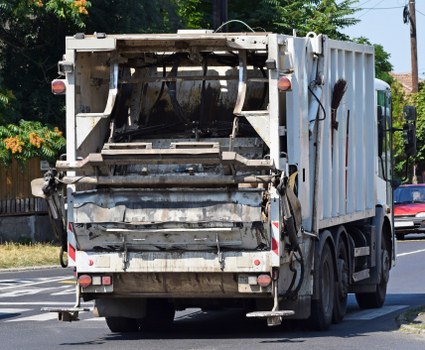 containerised food-waste tanks are routed to anaerobic digestion facilities, while high-quality paper and cardboard are baled and sent directly to reprocessors. This separation-in-transit approach is central to a low-carbon logistics plan and helps maintain the eco-friendly waste disposal area standard for Morden commercial waste.
To support local circularity we work with licensed transfer stations that have robust auditing and weighbridge facilities so every tonne diverted is tracked. The use of nearby transfer points reduces vehicle miles and ensures faster turnaround for trade waste collections, preserving the value of recyclable streams and improving overall recycling rates.
Partnerships with charities and community groups form a cornerstone of reuse in our approach to the sustainable rubbish area. We coordinate regular collections of usable office furniture, textiles, electronics and surplus food with local reuse charities and social enterprises so items are rehomed rather than disposed. These relationships help businesses meet corporate social responsibility aims while extending product lifecycles and reducing embodied carbon.
We maintain formal partnerships with multiple not-for-profit organisations that specialise in:
- furniture refurbishment and resale,
- textile reuse and repair,
- food redistribution networks for surplus commercial kitchens.
Operationally we emphasise waste hierarchy principles: prevention, reuse, recycling, recovery and only then disposal. Our advice for businesses includes small behavioural interventions that multiply effect across the borough — clearer bin signage, short staff briefings and scheduled consolidation windows to reduce contamination in dry recycling streams.
Fleet and collection methods matter for the carbon profile of local commercial waste services. Our fleet strategy combines low-carbon vans, electric smaller vehicles for town-centre runs and efficient Euro-6 engines for heavier collections, ensuring we deliver an effective, low-emission Morden commercial waste service. Route optimisation software and consolidated pickups further reduce emissions for each tonne handled in the sustainable rubbish area.
 Services for Different Sectors — Whether you operate a cafe, retail outlet, light industrial unit or an office in Morden, tailored solutions exist to help you meet the recycling percentage target. Hospitality sites get enhanced food-waste capture and grease management; retail units benefit from compacting and separated cardboard collection; offices receive secure confidential-shred pathways and bulk recycling lifts.
 In summary, our vision for an eco-friendly waste disposal area in Morden is collaborative and pragmatic: a high-performing Morden commercial waste service that reduces carbon, closes resource loops through well-managed transfer stations and charity partnerships, and operates with modern low-carbon vans. By adopting clear separation at source, committing to a 70% recycling target and utilising local reuse routes, businesses can help create a cleaner, greener borough and a truly sustainable rubbish area for the future.
